0 item(s)
View cart
You have no items in your shopping cart.
Last Updated: October 18, 2026
Millet is a small, nutrient-dense whole grain that has fed civilizations for thousands of years. Unlike rice or wheat, millets are naturally gluten-free, alkaline, and packed with fiber, protein, and essential minerals.
The real reason to cook with millets is practical: they work for breakfast porridge, lunch bowls, dinner sides, and snacks.
What makes millet different is its texture and adaptability.
Not all millets are the same, and knowing the differences helps you choose the right grain. Each variety has distinct flavor profiles, cooking times, and textures, and understanding them lets you adapt and create rather than follow a single recipe.
Foxtail millet is the most forgiving variety for beginners and the one we recommend starting with. It has a delicate, slightly sweet flavor and produces light, fluffy grains closest to what most people expect from rice.
Foxtail millet cooks in about 15-20 minutes on the stovetop and works in savory bowls, pilafs, and sweet dishes.
Bliss Tree New Jersey's Unpolished Foxtail Millet is cleaned using electronic sorting machines to remove stones and debris, then left unpolished to retain all its nutritional value.

Kodo millet is earthier than foxtail and produces a creamier texture when cooked. It's rich in protein and dietary fiber.
Kodo millet takes about 20-25 minutes to cook and pairs well with warming spices like ginger and cardamom. It's the go-to choice for traditional Indian dishes like bisi bele bath and sambar rice, and its pronounced flavor stands up to bold spice blends and rich broths.
Little millet lives up to its name, with tiny, delicate grains. When cooked, they produce a slightly sticky, creamy texture that works in porridges, breakfast bowls, and vegetable stir-fries.
Little millet's subtle flavor makes it an excellent base for sweet and savory preparations, especially vegetable-forward dishes where you want the millet to complement rather than dominate. It's also traditionally used in South Indian dishes like little millet stir-fry with vegetables.
Barnyard millet is the heartiest common variety, with a coarser texture and stronger flavor. It takes about 20-25 minutes to cook and produces grains that hold their shape well.
Barnyard millet shines in savory applications like grain salads, vegetable bowls, and pilaf-style preparations. Its stronger flavor pairs well with assertive spices and hearty vegetables, and it's traditionally used for porridges and idli (steamed cakes), as seen in recipes like Barnyard Millet Porridge by Lakshmipriya, New Jersey, and Barnyard Millet Idli by Lakshmipriya, New Jersey.
Proper preparation is where most beginners stumble and where they find success once they understand the process. Rinsing and inspecting your millet prevents unwanted grit and ensures clean, clear flavors.
Rinsing millet removes dust, debris, and any stones that escaped the sorting process.
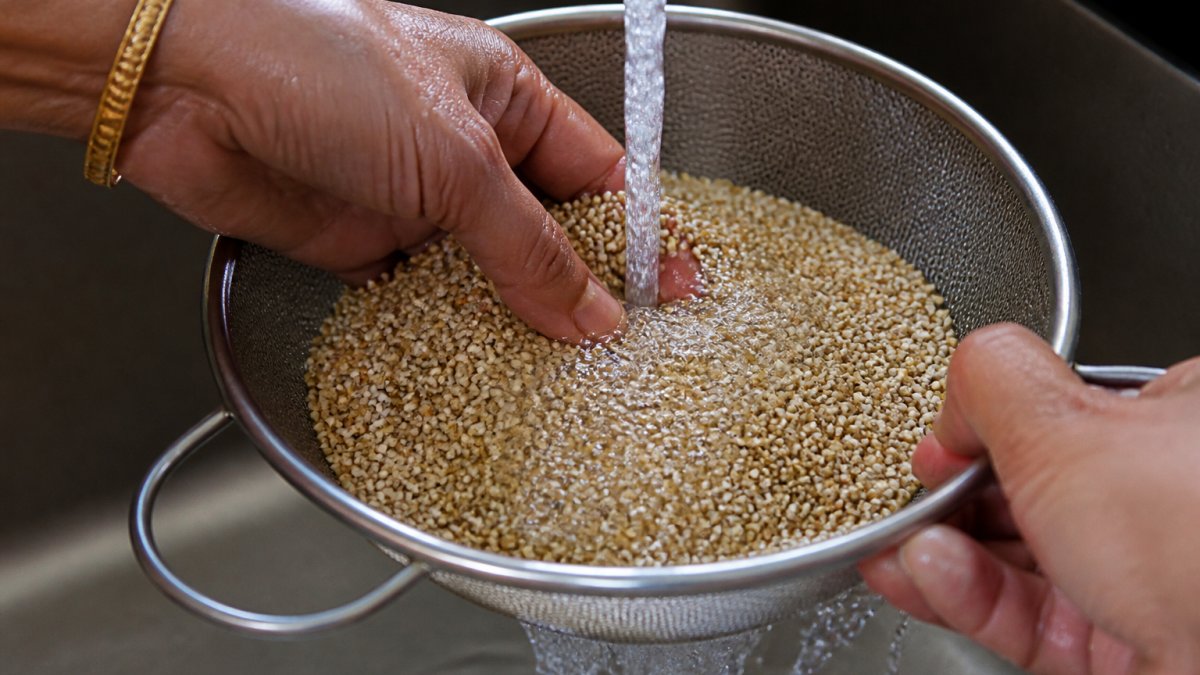
Don't skip this step, even if the millet looks clean. Bliss Tree New Jersey uses electronic sorting machines to remove stones and dirt, but rinsing clears any remaining dust.
Soaking millet before cooking is optional. Soaking for 30 minutes to 2 hours can reduce cooking time by 5-10 minutes and may improve digestibility for some people, though many cooks skip it and still get excellent results.
If you do soak, drain completely before cooking and add fresh water according to your grain-to-water ratio. Some cooks soak for easier digestion; others skip it for speed.
The choice depends on your schedule.
The water-to-grain ratio is the foundation of successful millet cooking. The standard is 1 part millet to 2 parts water, though this varies slightly by variety and preferred texture.
| Millet Variety | Water Ratio | Cooking Time | Texture Result |
|---|---|---|---|
| Foxtail Millet | 1:2 | 15-20 minutes | Fluffy, separate grains |
| Kodo Millet | 1:2 to 1:2.25 | 20-25 minutes | Creamy, slightly sticky |
| Little Millet | 1:2 | 15-20 minutes | Tender, light |
| Barnyard Millet | 1:2 to 1:2.25 | 20-25 minutes | Firm, substantial |
Stovetop cooking is the most straightforward method and gives you direct control:
Measure your millet and water. Use a 1:2 ratio as your starting point. One cup of millet requires two cups of water or broth.
Bring the liquid to a boil. Use a medium saucepan or pot. If you're using broth instead of water, the flavor will be richer and more complex.
Add the rinsed millet. Stir once to combine, then reduce heat to low.
Cover and simmer. Place a lid on the pot. The millet should simmer gently, not boil vigorously. This prevents the grains from breaking apart.
Cook without stirring. Resist the urge to peek or stir. Leave the lid on and let the millet cook undisturbed for 15-25 minutes, depending on the variety.
Check for doneness. The millet is done when all the water is absorbed and the grains are tender. If water remains, add a few more minutes of cooking time.
Fluff with a fork. Remove from heat and let it rest for 5 minutes. Fluff gently with a fork to separate the grains.
Unpolished Millets Combo (Kodo, Foxtail, Little & Barnyard) - 8lb →
Using broth instead of water adds depth without extra effort; only the liquid changes.
Cooking time varies by variety and preferred texture. Foxtail and little millet finish in 15-20 minutes; kodo and barnyard take 20-25.
Don't rely solely on a timer. The first time you cook a variety, start checking at the lower end of the time range.
Perfectly cooked millet has individual grains that are soft but hold their shape. Mushy or clumpy means too long or too much water; crunchy means more time.
Once you've mastered basic millet cooking, simple recipes build confidence and show how versatile the grain is. These three work with any variety, though foxtail and little millet are most forgiving for beginners.
A savory millet bowl is the easiest way to use cooked millet. Start with one cup as your base, add roasted or sautéed vegetables (carrots, bell peppers, zucchini, or whatever you have), drizzle with lemon juice, olive oil, and salt, and top with fresh herbs like cilantro or parsley.
It works for lunch or dinner and scales for meal prep: cook a large batch on Sunday, then vary the vegetables and dressing throughout the week.
Breakfast porridge is where millet shines. Use a 1:3 millet-to-liquid ratio and cook for 20-30 minutes, stirring occasionally, until creamy and oatmeal-like.
Sweeten with jaggery, honey, or maple syrup, add warming spices like cinnamon or cardamom, and top with coconut, nuts, or fresh fruit.
Stir-frying cooked millet with vegetables and ginger creates a quick, flavorful dish for any meal. Heat oil in a large pan or wok, add minced ginger and vegetables, then the cooked millet, and toss for 3-5 minutes until heated through and lightly caramelized.
This works beautifully with little millet, whose slightly sticky texture holds everything together. Season with salt, pepper, and a splash of soy sauce or tamari if desired.
Understanding where beginners stumble helps you sidestep those pitfalls. The good news: millet is forgiving, and small mistakes rarely ruin a batch.
The first mistake is using too much water, which produces mushy, clumpy millet instead of fluffy grains.
The second is cooking on high heat, which evaporates water too quickly and can scorch the pot.
The third is stirring during cooking, which breaks apart the grains and creates a starchy, gluey texture.
The fifth is cooking all varieties the same way.
Cooked millet stores well and makes meal prep straightforward.
Batch cooking on weekends saves time on busy weekdays. Cook three to four cups, portion into containers, and use throughout the week in bowls, stir-fries, porridges, or mixed into other grains.
To reheat, add a splash of water or broth and warm gently in a saucepan over low heat, stirring occasionally.
Many cooks find reheated millet tastes even better than fresh because the flavors have melded, making it ideal for meal prep and batch cooking.
Cooking with millets doesn't require special equipment or advanced technique, it requires understanding the grain itself and respecting the simple process. Our Unpolished Millets Combo gives you all four varieties to explore, each cleaned with electronic sorting machines and delivered to your door.

Foxtail millet is the most forgiving for beginners because it has a mild flavor and cooks reliably. Barnyard millet is also beginner-friendly and works well as a rice substitute. Both cook in about 15-20 minutes and produce fluffy results when you follow the water ratio of 1 part millet to 2.5 parts water. Bliss Tree offers an Unpolished Millets Combo that includes foxtail, kodo, little, and barnyard varieties, so you can experiment and find your preference.
The standard millet water ratio is 1 part millet to 2.5 parts water or broth. For example, use 1 cup millet with 2.5 cups water. Foxtail and barnyard millet work well at this ratio and produce fluffy, separate grains. Little millet and kodo millet may absorb slightly more liquid, so you can adjust to 1 part millet to 2.75 parts water if your first batch seems too firm. Always start with 2.5 and adjust based on your results.
Most millet varieties cook in 15-20 minutes on the stovetop after the water reaches a boil. Foxtail millet typically finishes in 15-18 minutes, while kodo and little millet may take 18-20 minutes. Barnyard millet cooks in about 15 minutes. Bring the water to a boil, add rinsed millet, reduce heat to low, cover, and simmer without stirring. The millet is done when all water is absorbed and grains are tender but still distinct.
Always rinse millet before cooking to remove dust and debris. Place it in a fine-mesh strainer and rinse under cool running water for 30-60 seconds, stirring gently with your fingers. Soaking is optional. A 15-30 minute soak can soften the grain slightly and reduce cooking time by 2-3 minutes, but it is not necessary for beginners. Rinsing alone is sufficient and produces reliable results.
Millet is cooked when all the liquid is absorbed and the grains are tender but still separate. Lift the lid and check that no water remains at the bottom of the pot. The grains should feel soft when you bite one, but not mushy or clumpy. If water remains, cover and simmer for another 2-3 minutes. Once cooked, fluff with a fork to separate the grains and release steam.
Yes, millet is an excellent rice substitute. It has a slightly nutty flavor and a fluffy texture similar to rice when cooked with the proper water ratio. Use millet as a base for bowls, pair it with curries, or mix it with vegetables for lunch and dinner. Barnyard millet and foxtail millet work particularly well as rice alternatives. Start by replacing half your usual rice with millet, then gradually increase the proportion as you become comfortable with the grain.
Store uncooked millet in an airtight container in a cool, dry place away from direct sunlight. It keeps for several months. Bliss Tree millets are free from preservatives and anti-caking agents, so proper storage is important to maintain freshness. Cooked millet keeps in the refrigerator for 3-4 days in an airtight container. You can also freeze cooked millet for up to 3 months. Reheat gently on the stovetop with a splash of water or in the microwave.