0 item(s)
View cart
You have no items in your shopping cart.
Last Updated: October 19, 2026
Building a foundation of traditional Indian cooking ingredients starts with spices. These aromatic compounds transform simple base ingredients into deeply flavorful dishes that define regional cooking traditions across India.
When assembling your spice collection, the distinction between whole and ground spices matters. Whole spices retain essential oils longer, delivering more vibrant flavors when freshly ground. Ground spices offer convenience but lose potency within 6-12 months of opening.
Whole spices maintain aromatic compounds far longer than ground ones. A whole cumin seed stored in a cool, dark cabinet stays flavorful for 2-3 years, while ground cumin loses its punch within months.
For traditional Indian cooking, stock both. Whole spices work best toasted briefly before grinding or added to hot oil during tempering, releasing their full flavor. Ground spices suit quick weeknight cooking when you can't toast.
Whole spices shine in regional specialties. South Indian cooking relies heavily on tempering whole spices in hot oil or ghee at the start of cooking.
These four spices form the essential core of traditional Indian cooking ingredients, each defining different regional styles and dishes.
Cumin appears in nearly every Indian savory dish. Its warm, earthy flavor works in curries, rice, and lentils.
Coriander balances cumin's earthiness with citrus notes. Ground coriander brightens curries, while whole seeds toast beautifully for tempering. It works equally well in savory and sweet applications.
Turmeric gives many Indian dishes their golden color. Bliss Tree New Jersey's Turmeric Powder is ground from the finest turmeric root without artificial colors, chemicals, or additives, delivering authentic flavor and nutritional benefits.

Cardamom provides complex, sweet and cooling notes. Black cardamom (larger, smoky pods) appears in savory dishes and rice. Green cardamom (smaller, delicate) works in sweet and savory contexts.
Heat levels vary across Indian regional cuisines. South Indian cooking typically incorporates more chili heat than North Indian styles. Understanding this helps you calibrate spice levels for authentic results.
Dried red chilies bring heat and depth. Whole dried chilies can be removed after tempering to control heat. Chili powder distributes heat evenly throughout a dish.
Chili powder adds heat uniformly, while whole dried chilies create pockets of intense flavor. Beginners get more predictable results with powder; as you gain experience, experiment with whole chilies for complex heat.
These seeds define the tempering technique central to South Indian cooking. Mustard seeds pop and crackle in hot oil, releasing a pungent, nutty flavor. Fenugreek seeds bring subtle maple-like sweetness that balances other spices.
Both work almost exclusively in tempering: heating oil or ghee, adding whole spices, and letting them infuse before combining with other ingredients. This technique appears in dals, rice, and vegetable curries throughout South Indian cooking.
Beyond the essential four, several spices appear regularly in traditional Indian cooking ingredients. Black pepper, fennel, nigella, and asafoetida each serve specific regional purposes.
Black pepper adds gentle heat and complexity. Fennel brings cooling, sweet notes to rice and spice blends. Nigella seeds (kalonji) add nutty flavor to breads and vegetables. Asafoetida, a pungent resin, adds savory depth in small quantities, particularly in South Indian cooking.
The Essential Indian Masala Combo from Bliss Tree New Jersey provides three foundational powders, red chilli, turmeric, and coriander, in one convenient package.

Beyond spices, foundational ingredients appear across all Indian regional cooking. Oils, grains, and aromatics form the base layer for spiced dishes.
Oil choice impacts flavor in Indian cooking. Coconut oil brings tropical sweetness to South Indian dishes. Mustard oil adds peppery heat to North Indian and Bengali preparations. Sesame oil provides nutty richness in small quantities.
Cold-pressed oils retain more flavor and nutrition than refined alternatives, without chemical residues from extraction. Bliss Tree New Jersey sources cold-pressed oils that preserve authentic taste while supporting your health-conscious lifestyle.
Ghee, clarified butter with milk solids removed, appears in cooking and finishing (Health benefits of ghee: Review of Ayurveda and modern science perspectives).
Basmati rice is the foundation for most Indian rice dishes. Long-grain basmati cooks into separate, fluffy grains. Sona masoori, slightly shorter-grained, works well for everyday cooking and biryani.
Millets, an ancient grain category, are gaining recognition for nutritional density. Finger, pearl, and foxtail millet each bring unique textures to traditional preparations, with higher protein and mineral content than refined grains.
Wheat flour, ground from whole wheat berries, forms the base for Indian breads like roti and chapati. Chickpea flour (besan) appears in batters, snacks, and curries throughout Indian cooking.
Lentils and pulses form the protein foundation of Indian vegetarian cooking, each variety bringing distinct flavor, texture, and cooking time.
Toor dal (split pigeon peas) represents the most commonly used lentil in South Indian cooking.
Bliss Tree New Jersey's Toor Dal comes from selective farmers without artificial polishing or preservatives.
Moong dal (split mung beans) cooks faster than toor dal, making it perfect for quick weeknight meals.
Masoor dal (red lentils) cooks rapidly and breaks down into smooth puree, ideal for creamy dal preparations. The reddish color turns golden when cooked.
Essential Indian Masala Combo →
Chana dal (split chickpeas) brings slightly sweet, nutty flavor to curries and rice dishes. Its firmer texture resists breaking down even with extended cooking.
Whole chickpeas, kidney beans, and black-eyed peas appear in regional specialties and festival dishes. These require overnight soaking and longer cooking times than split lentils but offer heartier texture and deeper flavor.
South Indian cuisine emphasizes different ingredient combinations than Northern styles. Coconut appears more frequently, both fresh and dried. Tamarind provides sour notes that replace tomatoes in many preparations.
Asafoetida, a pungent resin from plant roots, appears in small quantities throughout South Indian cooking. Its savory, umami-like quality deepens flavor without adding recognizable taste.
Curry leaves, fresh or dried, provide aromatic garnish and flavor base. Their citrus-like notes work particularly well in coconut-based curries and rice dishes.
Fenugreek leaves (methi) appear fresh in seasonal preparations and dried year-round. Their slightly bitter, maple-like flavor balances rich coconut curries.
Starting your traditional Indian cooking ingredients collection doesn't require buying everything at once. Prioritize based on how frequently you cook and which cuisines appeal to you most.
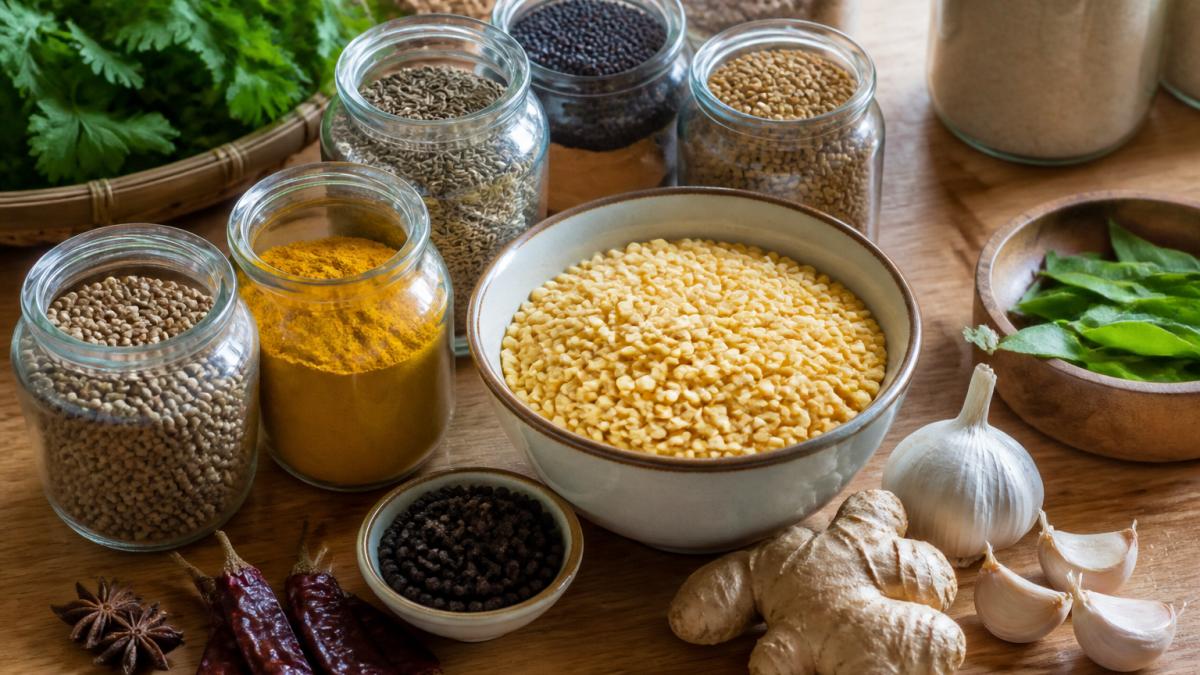
Begin with these essentials: cumin seeds, coriander powder, turmeric powder, chili powder, mustard seeds, and toor dal. These six items cover the majority of basic traditional Indian cooking needs.
From there, gradually expand based on specific recipes you want to master. If you enjoy South Indian cuisine, add coconut oil, curry leaves, and asafoetida. If North Indian cooking appeals to you, prioritize ghee and black cardamom.
The Essential Indian Masala Combo from Bliss Tree New Jersey simplifies this initial purchase.
Toasting whole spices before grinding or cooking intensifies their flavor dramatically. Heat a dry pan over medium heat for 1-2 minutes. Add whole spices and stir constantly for 30-60 seconds until fragrant.
For tempering, heat oil or ghee in a small pan over medium-high heat. Once hot, add whole spices carefully, they'll pop and crackle. Remove from heat after 15-30 seconds and pour the oil and spices over your prepared dish.
Grinding toasted spices at home requires a spice grinder or high-powered blender. Grind small batches immediately after toasting for maximum flavor.
Where you source traditional Indian cooking ingredients affects both quality and authenticity. Local Indian markets often provide fresher spices and better prices than mainstream supermarkets, though online delivery offers convenience.
Whole spices store longer than ground spices due to retained essential oils.
Lentils and pulses store in sealed containers at room temperature. Transfer them from original packaging to airtight containers to prevent moisture absorption. Check for insects before storing and discard any damaged beans.
Oils require cool storage to prevent rancidity.
Rice stores indefinitely in sealed containers at room temperature, though flavor gradually diminishes over years.
When specific ingredients aren't available, several substitutions work reasonably well.
Kasuri methi (dried fenugreek leaves) can substitute for fresh curry leaves when curry leaves aren't available, though the flavor profile differs slightly.
For those with sesame allergies, peanut oil or coconut oil serve as suitable cooking fat alternatives.
Tamarind paste can be replaced with lime juice or vinegar for sour notes, though the flavor won't be identical.
Building your traditional Indian cooking ingredients collection transforms how you approach home cooking.
Begin with turmeric, cumin, coriander, chili powder, and mustard seeds, these form the foundation of most traditional Indian cooking. Add ginger, garlic, onions, and tomatoes as aromatics. For lentils, toor dal is the most versatile and widely used in traditional recipes. Stock basmati rice as your grain staple. These core ingredients let you prepare hundreds of authentic dishes and build from there as you expand your cooking skills.
Whole spices retain flavor longer and are preferred for tempering, the practice of heating spices in hot oil to release their aromatic oils. Ground spices offer convenience and are essential for spice blends like garam masala. Many cooks keep both: whole spices for everyday tempering and ground powders for quick cooking.
South Indian cuisine relies heavily on coconut, curry leaves, mustard seeds, urad dal, and rice. Toor dal is essential for sambar and rasam. Use coconut oil or sesame oil as your primary cooking fats. Stock rice varieties like sona masoori for everyday cooking. Fresh ginger, garlic, and green chilies are daily staples. Asafoetida (hing) and fenugreek seeds add authentic flavor to South Indian dishes. These ingredients form the backbone of traditional South Indian home cooking.
Store everything in glass jars with tight lids in a cool, dark pantry to maximize shelf life and preserve flavor.
Look for products processed without artificial colors, preservatives, or additives. Quality toor dal and other lentils should be free from stones and debris. Spice powders should have vibrant color and strong aroma, indicating freshness. Cold-pressed oils maintain more nutrients than refined versions. Check for third-party certifications or quality guarantees. Premium sources often source directly from selective farmers, ensuring traceability from farm to your kitchen, which supports both quality and food heritage preservation.
For sesame allergies, substitute other cold-pressed oils like coconut or peanut oil in cooking. If you cannot tolerate toor dal, use moong dal or masoor dal as protein alternatives, both work in traditional recipes though flavors differ slightly. For fenugreek, increase mustard seeds for similar tempering effects. Coconut milk can replace ghee in some recipes for dairy-free cooking. Always check product facility processing information, as many spices and lentils are processed where nuts, wheat, and milk are also handled.
Indian pantry essentials include specialized spices, specific lentil varieties, and cooking fats that define traditional recipes. These ingredients, like toor dal, garam masala blends, and cold-pressed oils, create the authentic flavors central to Indian cuisine. Regular groceries lack the regional varieties and quality standards. Traditional Indian ingredients are often processed minimally without artificial additives, preserving nutritional value and authentic taste. Sourcing from dedicated providers ensures you get genuine products rather than substitutes or lower-quality versions.