0 item(s)
View cart
You have no items in your shopping cart.
Last Updated: October 17, 2026
If you're searching for traditional Indian ingredients near me, the fastest route is a specialty Indian grocery store, and the next best is a well-stocked supermarket aisle with a dedicated international section. Bliss Tree New Jersey has three decades of expertise in traditional grain collection, and we've learned that where you shop changes what you can cook. A specialty store carries the full range: fresh produce, dry goods, canned foods, frozen foods, and the specific spices a South Indian kitchen depends on.
Specialty Indian stores win on depth, not breadth. A dedicated Indian supermarket stocks regional spice blends, whole dry goods, and fresh vegetables that a general grocery store simply doesn't carry.

Here's how the two compare in practice:
| Factor | Specialty Indian Store | General Supermarket |
|---|---|---|
| Spice selection | Full range, regional blends | Limited, common spices only |
| Fresh produce | Okra, curry leaves, bitter gourd | Basic vegetables |
| Dry goods | Bulk rice, lentils, millets | Small packaged portions |
| Frozen foods | Full range of traditional items | Rarely stocked |
| Staff knowledge | Can answer ingredient questions | General staff only |
A common mistake is assuming the supermarket international aisle will have everything on your list. It won't. If a recipe calls for a specific regional blend, plan a specialty trip.
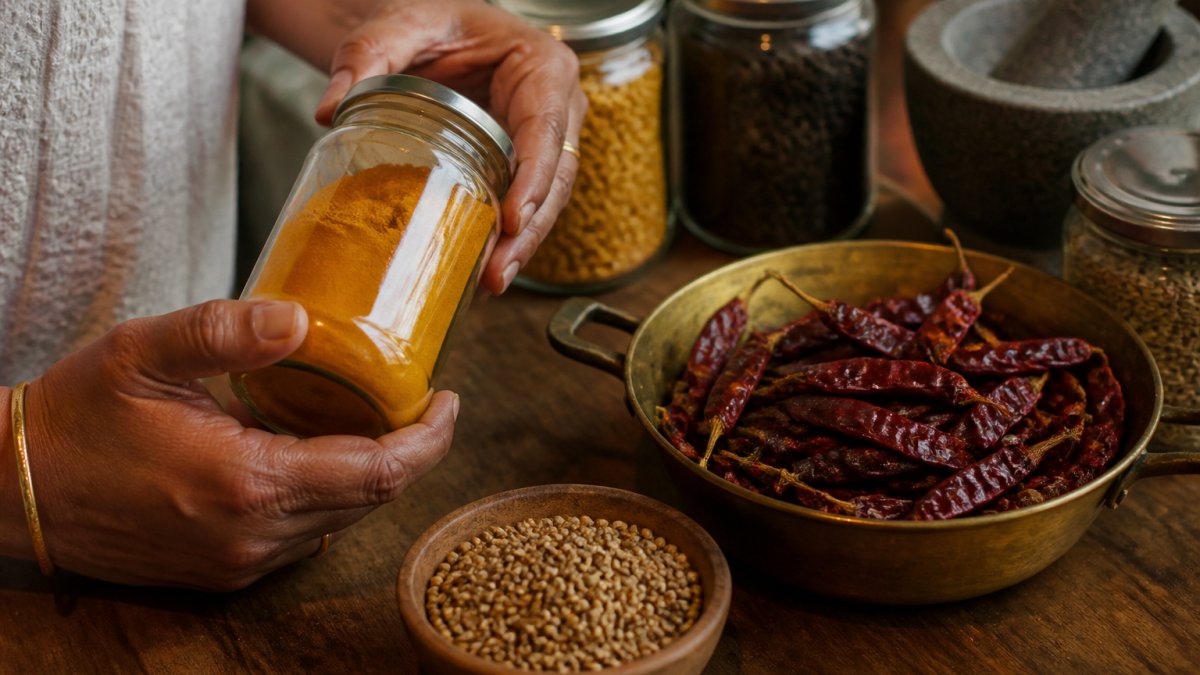
The fastest way to shop well is to know each ingredient by its regional names, its common forms, and the one cue that tells you it is fresh.
Read the ingredient list before the front label. Our Turmeric Powder lists one ingredient: Turmeric, and has no artificial colors, chemicals or additives. The same rule applies to spice blends, where fillers and added starch are common. Clean-label products list what you'd put in the dish yourself.

Open the jar or squeeze the bag and smell it. Strong, clean aroma is the single best signal of turnover. Powders that clump, whole spices that have lost their scent, and dried chillies that are brittle and faded all point to slow-moving stock. When in doubt, buy the smaller pack and restock sooner.
Choosing an Indian grocery store comes down to four checks: product range, freshness, staff knowledge, and how easy it is to verify stock. Walk the spice aisle first. If the powders are clumped or the jars are dusty, the turnover is slow.
Then check the practical details:
Many shoppers find that a store with a smaller footprint but fast-moving stock beats a large market with slow turnover. Selection matters, but freshness matters more.
South Indian groceries online solve the distance problem. Ordering online means you can search by ingredient, read the product range, and have dry goods, spices, and snacks delivered without a drive.
At Bliss Tree New Jersey, we source farm-to-fork from selective farmers and keep our products free from preservatives, artificial colors, and additives. Our range includes rice, millets, cold-pressed oils, and traditional snacks, with same-day delivery in select areas.
Indian grocery delivery works best when you match the service to your actual needs. For pantry staples you buy on a schedule, delivery saves the trip. For fresh produce you want to inspect, an in-person visit still has a role. The practical approach is to split your list: order the heavy dry goods and oils for delivery, and buy delicate fresh items in person.
A few habits keep delivery orders reliable:
Delivery doesn't compromise quality when the seller handles packing and sourcing well. It removes the drive and the guesswork.
Essential Indian Masala Combo →
Call ahead before a long drive. A quick phone call to confirm a specific ingredient saves a wasted trip. The key is to name the ingredient in every form a store might know it by, because the person answering may recognize the regional name but not the English one, or vice versa.
Use a short, specific script:
A store that stocks the item can hold a pack; one that doesn't will usually tell you so and may suggest a nearby alternative.
Stores label ingredients inconsistently, so keep a short list of alternates:
These checks work when the phone goes unanswered:
Many specialty stores now list inventory or offer pickup. Search the store's site for the ingredient, confirm the pack size and brand, and choose pickup if you want to inspect freshness at the counter. If the site shows the item as in stock, call to confirm before you drive, because online listings can lag behind the shelf.
Storage decides how long your ingredients stay fresh. Whole spices keep their aroma far longer than ground powders, so buy ground spices in smaller quantities and use them within a few months.
A simple storage plan:
Label containers with the date you opened them. It's a small habit that prevents a bland dish and a wasted purchase.
Finding traditional Indian ingredients near you comes down to knowing what to check and where to look.
Start with specialty Indian grocery stores in your area, which stock fresh spices, lentils, rice, and regional specialties that general supermarkets rarely carry. Search by location and read customer reviews to confirm freshness and selection. If you prefer not to make the trip, Indian grocery delivery services now bring traditional ingredients directly to your door, often with same-day options in select areas. Always check store hours and contact details before visiting.
Confirm the delivery area covers your zip code and ask about packaging for fragile items like rice and glass bottles of oil. Check customer reviews for complaints about broken grains or damaged shipments. Verify the return policy and whether the store lists clear ingredient and allergen information. For pantry staples like spices, look for sealed, food-grade packaging and a visible pack date so you know the product is fresh.
Smell is your best test for spices: turmeric, coriander, and sambar powder should have a strong, bright aroma, not a flat or dusty scent. Check that lentils and rice pour freely without clumping, which signals moisture. Look for clean labels without artificial colors or additives, and prefer stores with high review counts and recent customer comments about quality. Buying from a source that moves stock quickly, like a specialty market or a delivery service with regular turnover, improves your odds of getting fresh product.
Yes. Many specialty Indian stores now carry millets such as foxtail, kodo, and little millet, along with cold-pressed sesame, coconut, and groundnut oils. Ask whether the oils are cold-pressed rather than refined. Millets are best bought in quantities you will finish within a few months, and cold-pressed oils should be kept in a cool, dark place to preserve their taste.