0 item(s)
View cart
You have no items in your shopping cart.
Quick Summary
Farm to table food is not automatically safer than conventional food, because local sourcing shortens the supply chain but does not remove the risks of growing, harvesting, and handling. The research does not show a clear safety advantage either way. Judge any seller by verifiable practices, such as how they wash produce, their water source, and their inspection records.
Last Updated: November 1, 2026
Farm to table food is not automatically safer than conventional food, and the research does not show a clear safety advantage either way. The research does not show a clear safety advantage either way, and that is a more useful answer than a simple yes or no. Beyond the sourcing of ingredients, the actual environment where meals are prepared plays a critical role in determining kitchen food safety.
Many shoppers assume local food is cleaner, but that is a perception rather than a measured safety advantage.
Key point: Feeling that local food is safer is not the same as proof that it is.
USDA Food and Nutrition Service Farm to School food safety research
Local sourcing shortens the supply chain. It does not remove the risks that come with growing, harvesting, and handling food. Food can become unsafe at many points between the farm and the table.
A short supply chain can still carry significant risk if no formal controls are in place.
Farm to Table: Building Local and Regional Food Systems
Food can become unsafe at many points between the farm and the table, including growing, harvest, transport, storage, and retail.
Watch out: Washing produce does not remove every risk. Wash fresh produce just before you eat or cook it, not before storing it.
Global Food Safety: Keeping Food Safe from Farm to Table
Safe handling at home is the step you control most directly. Follow these steps every time you bring fresh produce into your kitchen.
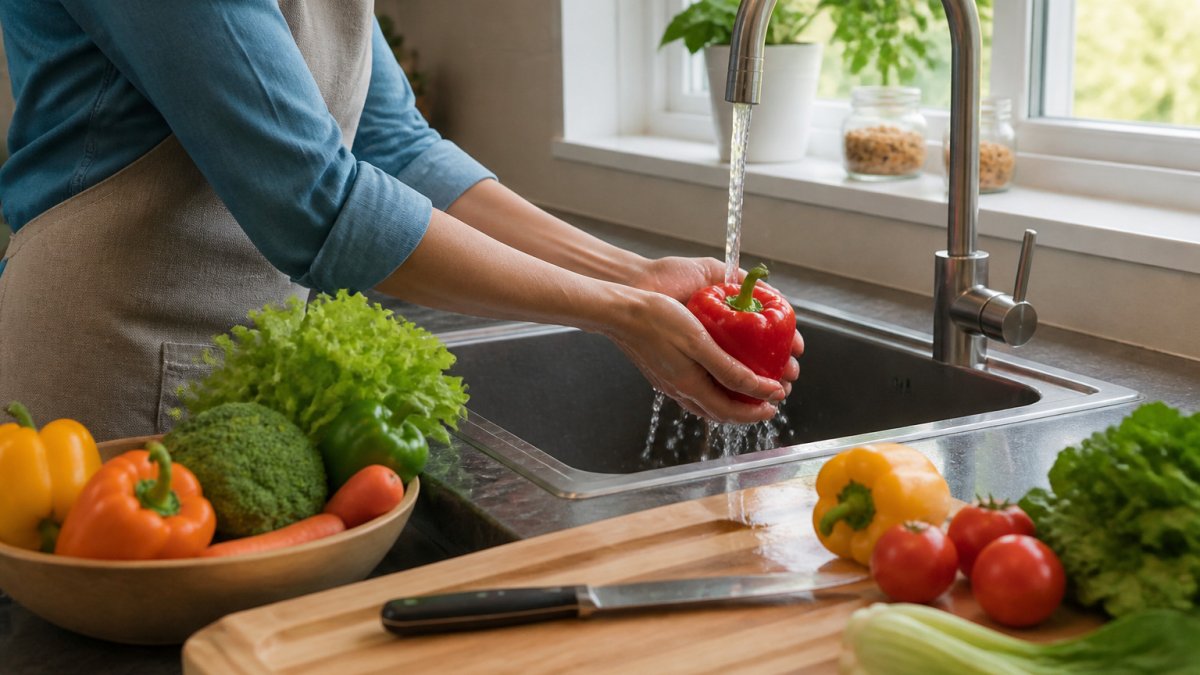
A home cook rinsing vegetables under a kitchen tap is the most practical example of this routine.
!A home cook rinsing fresh vegetables under a kitchen tap while a cutting board and bowl of produce sit on a clean countertop
When you buy from a farm stand, farmers market, or farm-to-table seller, ask direct questions. Clear answers tell you more than a label does.
Good sellers answer these questions without hesitation. Vague answers are a reason to look elsewhere.
Comparing the two options comes down to specific practices, not labels. Use this checklist when you evaluate a seller.
| What to Check | Farm-to-Table Seller | Conventional Store |
|---|---|---|
| Source traceability | Often direct from the grower | Usually through distributors |
| Recall notices | Check the seller's history | Track brand and store alerts |
| Handling practices | Ask the seller directly | Review store posted policies |
| Inspection records | Ask for documentation | Often visible through retailers |
Neither option wins by default. The better choice is the one where the seller can show you clear, verifiable practices.
Clean-label shopping adds another layer to your choices. Bliss Tree New Jersey offers traditional South Indian groceries, including rice, millets, cold-pressed oils, and snacks, that are free from preservatives, artificial colors, and additives. Our farm-to-fork sourcing focuses on selective farmers, and we deliver same-day in select New Jersey areas.
If you are comparing options, you can read how South Indian snacks from Bliss Tree compare with generic snacks. Shoppers who want to check the staples they buy may also find it useful to see where to buy chemical-free rice in New Jersey. For oils, our guide to whether cold-pressed oils are additive-free explains what to look for on labels. And if you are weighing whether to buy clean-label groceries online, this guide on whether clean-label Indian groceries are worth buying online covers the trade-offs.
Read the labels, ask questions, and choose the sources that can show you their work. That approach matters more than any single label claim.
Not automatically. Local sourcing shortens the supply chain, but the National Academies of Sciences, Engineering, and Medicine report describes multiple points between farm and table where disease-causing organisms and other hazards can enter the food supply. Believing local food is safer is a perception, not a measured safety advantage. Safety depends on the specific farm's handling practices, cleanliness, water quality, storage and transport. Ask the producer how they manage these steps rather than assuming local equals safer.
Shorter supply chains can reduce some risks, such as time in transit, but they do not remove them. Sustainable Agriculture Research and Education notes that food can become unsafe at many points between farm and table, and AgriForaging points out that shorter supply chains can still carry significant risks without formal distribution controls. The practical takeaway is that fewer handoffs help, but verified handling practices matter more than distance alone.
Rinsing fresh produce under running water removes dirt and reduces surface microbes, but it does not remove every germ or all pesticide residue. Scrub firm produce such as melons and cucumbers with a clean brush, dry items with a clean towel, and keep raw produce separate from raw meat. Cutting away damaged areas and refrigerating cut produce promptly also reduces risk. Washing is one step in safe handling, not a complete safeguard.
Ask how the produce is washed and whether water used on crops is tested, how harvest and packing areas are kept clean, how long products sit before sale, and whether the seller follows recognized food-safety practices. Ask about cold storage and how raw animal products are handled, and whether the seller can explain their traceability process if a problem occurs. Clear, specific answers are a better signal than marketing language about freshness or naturalness.